

Patent Marking in Japan: Is It Required?
A number of clients ask us whether patent marking is required or advisable in Japan. The short answer is: patent marking is not mandatory in Japan, and failure to mark a patented product does not prevent enforcement of the patent. However, marking can be useful as a way of notifying competitors of patent rights and deterring potential infringement.
What is patent marking?
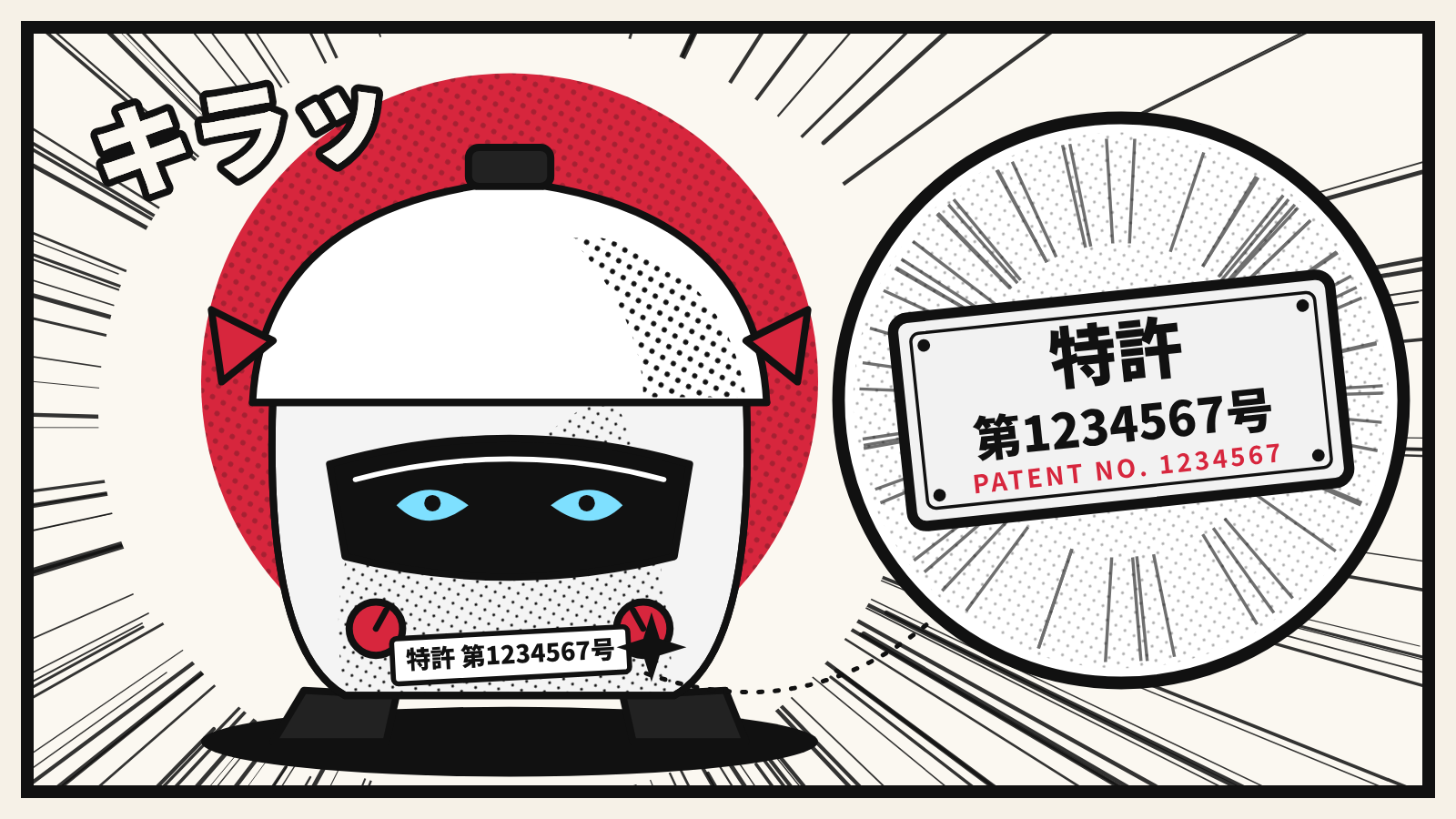
Patent marking refers to indicating on a patented product or its packaging that the product is protected by a patent, typically by displaying the word "Patent" together with the relevant patent number.
Patent marking provides notice to competitors and members of the public that the product is protected by patent rights. This can help deter potential infringement and assist in the recovery of damages in some jurisdictions.
It can also have a commercial benefit: communicating the product's technical innovation and value.
Is patent marking mandatory in Japan?
No, there is no general legal requirement in Japan to mark patented products. Patent owners are asked to "endeavor" or "make efforts" to mark their products, but there is no obligation to do so, and no penalty for not marking.
“A patentee, exclusive licensee, or non-exclusive licensee must endeavor to mark a product that constitutes a patented invention, a product produced by a process that constitutes a patented invention, or the packaging of the patented product, with a mark ...... indicating that the product or process constituting the invention is patented.”
(Japanese Patent Act, Article 187)
Failure to mark a patented product also does not prevent the patent owner from enforcing their patent rights in Japan.
How is this different from the US?
In the United States, patent marking can directly affect the recovery of damages for past infringement. In general terms, where a patented product is subject to the marking provisions, proper marking provides constructive notice of the patent. If the product is not marked, damages can generally be recovered only for infringement occurring after the infringer receives actual notice.
Japan has no equivalent rule. Marking is not a condition for claiming damages for past infringement, and under Article 103 an infringer's negligence is presumed in any event.
However, marking can still be useful in Japan – a clear indication may deter competitors from adopting potentially infringing technology.
What should the marking say?
Japanese law provides a prescribed form of patent marking.
Under Article 68 of the Regulations for Enforcement of the Patent Act, the indication for a product patent is "Patent" (特許) together with the patent number. For a patent covering a process for producing a product, the indication is "Method Patent" (方法特許) together with the patent number.
However, this refers to the Japanese wording. Stating "Patent" or "Patented" in English with the patent number is commonly used in practice.
What about "Patent Pending"?
Japanese patent law does not mention "pending" applications in terms of marking. You may use "Patent pending" if an application is genuinely pending, but remove it once the application is refused, withdrawn or lapses.
Avoid false patent marking
The fact that patent marking is voluntary does not mean it can be used without restriction.
Article 188 of the Patent Act prohibits false patent indication (or anything confusingly similar) on a non-patented product, or representing a non-patented product as being patented in an advertisement, including on a website.
Doing so is a criminal offence, punishable by up to three years' imprisonment or a fine of up to ¥3,000,000, and in the case of a corporation, a fine of up to ¥100 million.
Patent owners using patent markings should therefore carefully check the status of the patents indicated on their products, including whether the patent has expired, lapsed or been invalidated, or whether the product has been changed so that it no longer falls within the scope of the indicated patent.
What about virtual patent marking?
In the US, the America Invents Act (2011) allows a patent owner to mark a product with the word "patent" or "pat." plus a web address, where a free, public page links the product to its patent numbers. This reduces the need to change physical product markings when patents change or expire.
Japanese law has no equivalent provision, though some companies now print a URL or QR code that leads to a patent list, which makes it easier to keep information current.
Our advice
Patent marking in Japan is optional and our clients rarely choose to do so. The principal potential benefits are notice, deterrence and marketing value. However, if you decide to patent mark your products, you should ensure the marking is accurate, including by keeping a record of the relevant patents and their expiry dates.
If you would like advice on patent marking, Japanese patent protection, or any other aspect of Japanese IP, please contact KIPB.

Steve Denney
Director, International Clients & Business Development, KIPB (Japan)
We offer discounted services for many first-time clients and seamless onboarding for companies transitioning their Japanese IP matters to our firm.